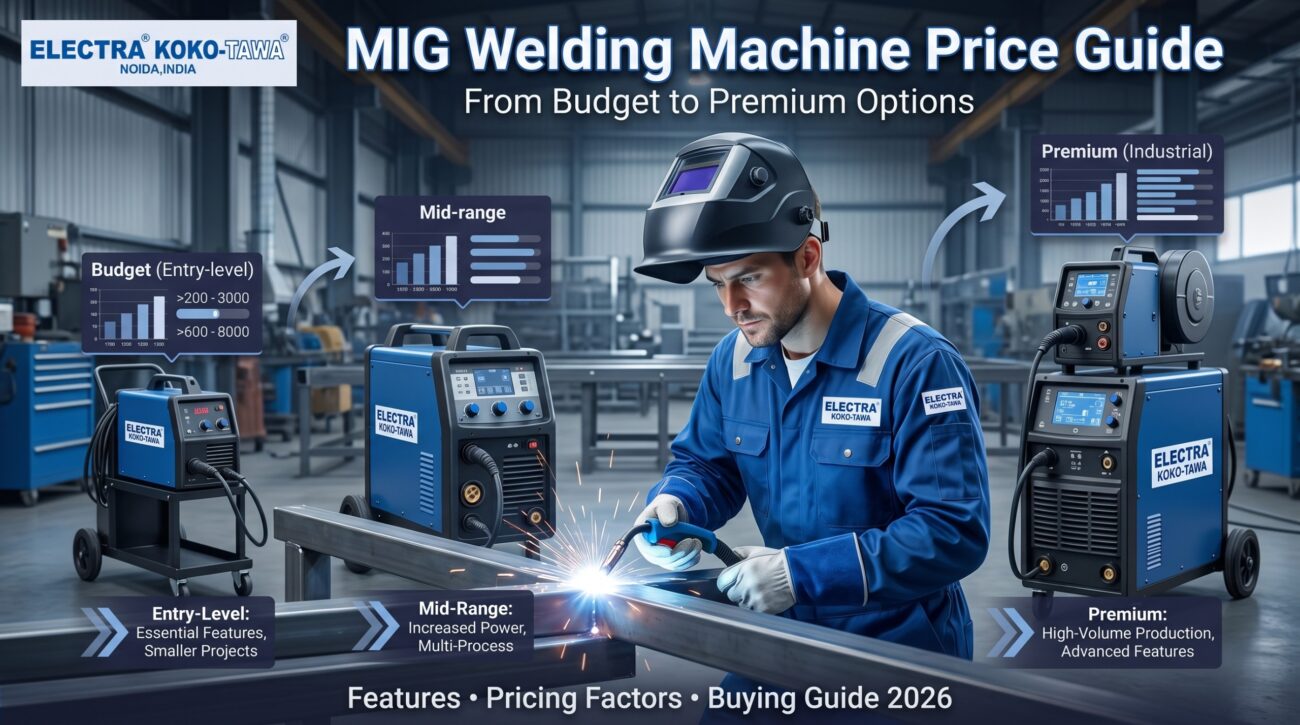

Welding machines have become an essential part of industries like construction, manufacturing, automotive, fabrication, and infrastructure development. As technology evolves and industrial demand grows, understanding the welding machine price in 2026 becomes increasingly important for buyers looking to make informed purchasing decisions.
Whether you are a workshop owner, industrial buyer, contractor, or small business operator, selecting the right welding machine requires balancing performance, durability, features, and cost. Several factors influence welding machine pricing, including machine type, power capacity, technology, and brand reputation.
Established in 1986 by Kamal Kumar, Electra Koko Tawa has emerged as one of North India’s leading welding machine manufacturers, headquartered in Noida, Uttar Pradesh. With decades of expertise built around quality and continuous product development, the company has earned trust across industries by delivering reliable welding solutions.
Why Welding Machine Prices Are Changing in 2026
The welding industry is continuously evolving. New technologies, automation, and energy-efficient systems have transformed how welding equipment is designed and manufactured.
Some key reasons affecting welding machine price trends include:
- Increased demand from manufacturing industries
- Advanced inverter technology integration
- Rising raw material costs
- Automation and smart welding features
- Improved energy efficiency standards
- Better portability and compact designs
Modern welding equipment now offers enhanced precision and lower power consumption, influencing overall market prices.
Factors That Affect Welding Machine Price
Understanding what drives pricing can help buyers choose machines according to their operational requirements.
1. Machine Type
Different welding technologies come with varying pricing structures:
- Arc welding machines
- MIG welding machines
- TIG welding machines
- Spot welding machines
- Inverter welding machines
- Industrial heavy-duty systems
Industrial-grade machines typically cost more because they deliver higher output and longer operating cycles.
2. Power Capacity
Machines with higher amperage and heavy-duty performance naturally fall into premium categories. Small workshop requirements differ significantly from industrial manufacturing applications.
Lower-capacity units are often suitable for:
- Repair work
- Home workshops
- Light fabrication
Higher-capacity systems are commonly used in:
- Manufacturing plants
- Structural projects
- Heavy fabrication industries
3. Technology Features
Modern welding systems increasingly include:
- Digital displays
- Smart controls
- Thermal overload protection
- Energy-saving modes
- Portable inverter designs
- Multiple welding process compatibility
Machines equipped with advanced features usually carry a higher price point.
4. Build Quality and Reliability
Long-term durability significantly impacts pricing. Machines built using premium components often deliver:
- Reduced maintenance costs
- Better operational stability
- Longer lifespan
- Improved safety performance
This makes initial investment worthwhile for industrial users.
Why Quality Matters More Than Low Prices
Many buyers focus only on purchasing the cheapest welding equipment available. However, selecting machinery solely on price can create challenges over time.
Low-quality machines may result in:
- Frequent maintenance issues
- Reduced welding precision
- Increased downtime
- Higher electricity consumption
- Shorter machine lifespan
Investing in dependable equipment often reduces long-term operational expenses.
Choosing the Right Welding Machine for Your Business
Before purchasing, consider the following:
Define Your Usage
Ask:
- What materials will you weld?
- How frequently will the machine be used?
- What thickness level will be handled?
- Is portability necessary?
Clear answers help narrow down suitable options.
Check Energy Efficiency
Energy-efficient welding machines reduce operating costs while delivering consistent performance.
Consider After-Sales Support
Reliable technical support and spare part availability are crucial factors when purchasing industrial equipment.
Evaluate Manufacturer Experience
Experienced manufacturers often provide:
- Better quality control
- Product innovation
- Consistent performance
- Trusted customer service
Why Businesses Trust Electra Koko Tawa
For nearly four decades, Electra Koko Tawa has maintained a strong reputation in the welding industry through quality-focused manufacturing and continual technological development.
Their strengths include:
- Decades of industry experience
- Advanced manufacturing capabilities
- Strong quality standards
- Diverse welding solutions
- Customer-focused innovation
Businesses across industries continue to trust established manufacturers because reliability directly affects productivity.
Final Thoughts
The welding machine price in 2026 will depend on multiple factors including machine type, technological features, capacity, and build quality. Buyers should focus beyond pricing alone and prioritize performance, durability, and long-term value.
With growing industrial requirements and technological advancements, selecting the right welding machine becomes an investment rather than simply a purchase.
For businesses seeking dependable and performance-driven welding solutions, experienced manufacturers with a legacy of innovation remain a smart choice.
By understanding market trends and evaluating your requirements carefully, you can make a purchasing decision that supports productivity and long-term growth.